On 15 October, 2015, the International Advisory Committee Meeting of the Center for Brain-Inspired Computing Research of Tsinghua University and the International Brain-inspired Computing Forum was held in the multifunctional hall of the FIT building. Xue Qikun, vice president of Tsinghua University, delivered the opening speech. Shi Luping, the director of the Center of the Brain-Inspired Computing Research, chaired the committee meeting and summarized the development of brain-inspired computing at home and abroad including the contributions of Tsinghua University over the past two years. Representatives from seven departments of the Center for Brain-Inspired Computing Research of Tsinghua University organized more comprehensive reviews and reports on all aspects of the research center.
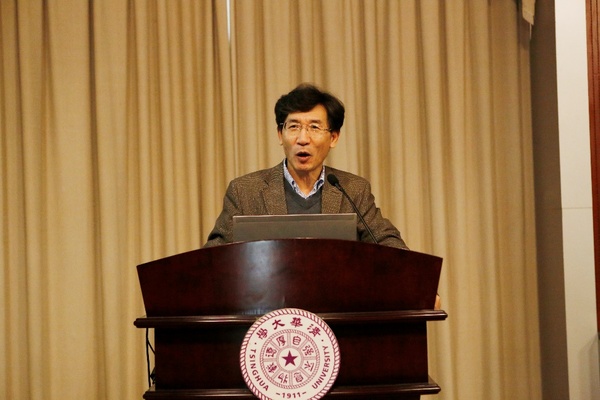
Figure 1 President Xue Qikun deliveries an opening speech
The morning meeting was hosted by Associate Professor Deng Ning, director of the Office of Scientific R & D at Tsinghua University. In the afternoon, Barbara DeSalvo, deputy director of the LETI-CEA––Atomic Energy Commission Electronics and Information Technology Laboratory in France hosted the International Brain-inspired Computing Forum. At the forum, R. Stanley Williams—a senior scientist at Hewlett-Packard (HP) Company, the inventor of the memristor (Nature 2008), and one of the main promoters of the American Brain Project—introduced basic information about the American Brain Project. Later, researchers from the University of California, the University of Hamburg, the University of Waterloo, Pohang University of Science and Technology, Peking University, Sichuan University, the Institute of Automation of Chinese Academy of Sciences, the Institute of Computing Technology of the Chinese Academy of Sciences, and the International Business Machines Corporation (IBM) and other research organizations also reported their findings in the field of brain-inspired computing. At the end of the conference, scholars had a heated discussion and put forward personal opinions on the development of brain-inspired computing technology. This forum attracted more than 150 domestic and foreign research scholars in the field of brain-inspired computing.
.
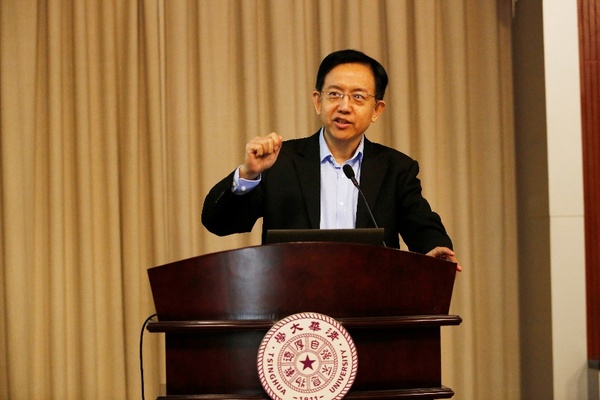
Figure 2 Professor Shi Luping reports the progress of the Center for Brain-inspired Research.
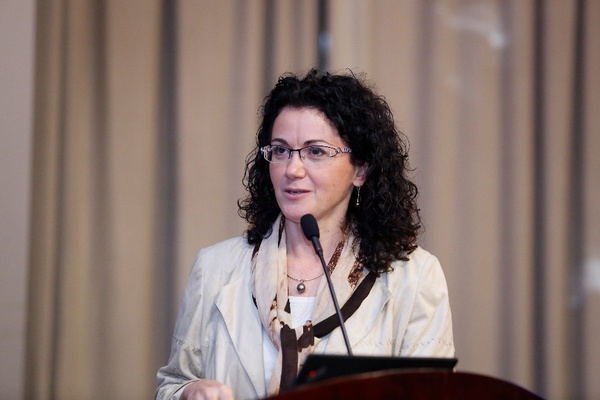
Figure 3 Barbara DeSalvo chairs the International Brain-inspired Computing Forum.
Meanwhile, the duty director of LETI-CA Barbara DeSalvo presided over the forum, in which R. Stanley Williams first delivered his report about the introduction of the American Brain Project. Williams was once one of the three major promoters of nanotechnology development in the United States more than a decade ago. He indicated that the reason behind his promotion of the American Brain Project lies in his confidence in brain-inspired computing as the key to transforming the world in the future. Subsequently, many domestic and foreign scholars also presented significant reports from their respective areas, including “Challenges of Brain-inspired Robots” delivered by Professor Zhang Jianwei from the University of Hamburg, “Intelligent Modeling and Calculation of Brain-inspired Computing” by researcher Zeng Yi from the Institute of Automation of the Chinese Academy of Sciences, and “Video Encoding Based on Early Visual System” by Professor Huang Tiejun from Peking University, and “Cambrian ‘Machine’ Learning” Processor by researcher Chen Yunji from the Institute of Computing Technology of the Chinese Academy of Sciences.
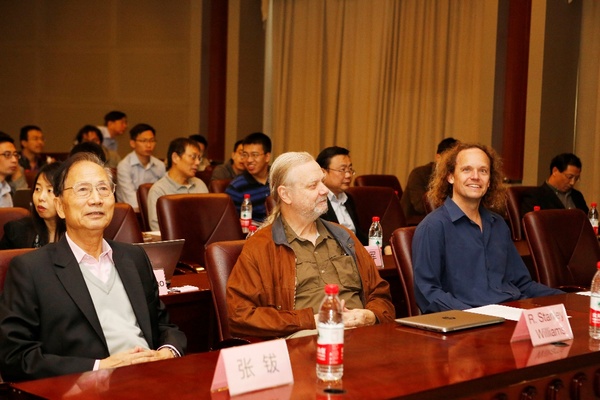
Figure 4 Academician Zhang Bo from the Department of Computer Science of Tsinghua University (left), R. Stanley Williams from the HP Company (middle, the inventor of the memristor, Nature 2008, the main promoter of the American Brain Project), Chris Eliasmith from the University of Waterloo (right, the proposer of the SPAUN Whole Brain Model ( Science 2012))
At the end of the forum, delegates conducted a brainstorming session for an hour. After in-depth discussions on the history, aims and the future progress of brain-inspired computing, eminent scholars at home and abroad proposed their comments and suggestions, which possessed important implications for the domestic development of the brain-inspired computing.
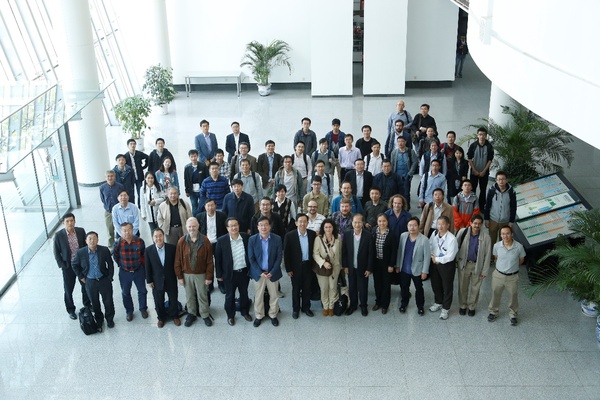
Figure 5 Photo of participants
Brain-inspired computing is not only an exciting research area in the scientific community, but also a brave exploration urgently needed in the development of the national information industry, which is at the same time a chance for Tsinghua University to deepen multidisciplinary integration. This International Brain-inspired Computing Forum unfolds the international and leading development pursuits of the Center for Brain-Inspired Computing Research at Tsinghua University in a comprehensive way.