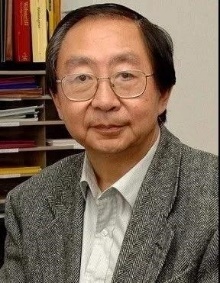
On 16th October, 2017, Professor Gao Guangrong, an endowed distinguished professor of electrical and computer engineering, University of Delaware, was presented with the 2017 IEEE Computer Society B. Ramakrishna Rau Award for his outstanding contributions in compiler techniques and microarchitectures designs at the MICRO-50 Conference in Boston. He then became the seventh recipient of the Rau Award, and the first Chinese scientist from mainland China.
The International Symposium on Microarchitecture (MICRO), working mainly on the innovative microarchitecture ideas and techniques for advanced computing and communication systems, is one of the most renowned conferences in computer architecture academia, and numbers among the three top conferences in the field alongside the International Symposium on Computer Architecture (ISCA) and the International Symposium on High-Performance Computer Architecture (HPCA). The Rau Award was established by MICRO in memory of B. Ramakrishna Rau, a senior research scientist at Hewlett Packard (HP) Labs, who expanded the application of the innovative computer microarchitecture and compiler techniques, and is awarded in recognition of distinguished contributors in the field of microarchitecture and compiler technology. On the occasion of the 50th anniversary of the MICRO conference, Professor Gao was selected for the award, which also reflects that the research findings led by Professor Gao––dataflow program execution models and parallel computing architecture—and its application promise are acknowledged fully by the international academic community.
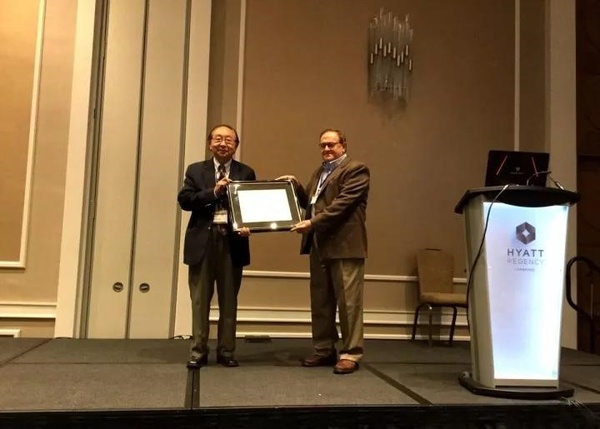
Picture1 Professor Gao Guangrong receives the 2017 IEEE Computer Society B. Ramakrishna Rau Award
Professor Gao received his B. S. degree in Electronic Engineering from Tsinghua University in 1968, and M. S. and Ph. D. degrees in Electrical Engineering and Computer Science from the Massachusetts Institute of Technology (MIT) in 1982 and 1986, respectively. He is the first student from China to receive such computer science graduate degrees from MIT. Since 1987, he lectured at McGill University and has been promoted to tenured professor. Currently, he is a tenured professor in the Department of Electrical and Computer Engineering as well as a doctoral supervisor, the founding director of Computer Architecture and Parallel System Laboratory (CAPSL), a fellow of the Association for Computing Machinery (ACM), a fellow of the Institute of Electrical Electronics Engineers (IEEE), and a fellow, the chairman and one of the founders of the ET International (ETI) Inc. Professor Gao visits Tsinghua University often each year and maintains close cooperation and profound interaction with professors here, namely with Professor Shi Luping, director of the Center for Brain-Inspired Computing Research, Professor Zheng Weimin, Professor Chen Wenguang, and Professor Zhang Youhui from the High Performance Computing (HPC) of the Computer Science and Technology Department. Professor Gao is currently an endowed visiting professor at Tsinghua University and a Senior Consultant at the Center for Brain-Inspired Computing Research.
Professor Ken Barner, dean of the Department of Electrical and Computer Engineering at the University of Delaware, said: “Professor Gao has been a pioneer in the field of computer microarchitecture for the past three decades. He is both a scholar and an entrepreneur, who is continuing to innovate in the areas of compilers, parallel programming and dataflow.”
Professor Gao has developed innovative dataflow models, computing and compiler architectures and system software techniques. He also applied these innovations in practice, which played a key role in the developments and applications of a series of high performance computing technologies such as IBM Cyclops-64 supercomputer, Dynax, SWARM, SPARTA, etc.
(Source: AI Era | Author: WEN FEN )